Design and support

Bose Professional Services for precise audio deployment

Bose Professional service work is framed for integrators, consultants, rental partners, and facility teams who need clear decisions before equipment is ordered. The process starts with room purpose, listening zones, coverage expectations, mounting constraints, control requirements, and commissioning responsibility. From there, a project can be routed toward portable PA, installed loudspeakers, subwoofers, line array systems, stage monitors, or amplification and mixing support without diluting the brief into generic audio advice.

The Bose Professional approach favors less hype and more signal path, room evidence, and operational accountability. The service path below gives decision makers a way to compare needs, document assumptions, and request a dealer or technical review with the information that actually changes a specification.
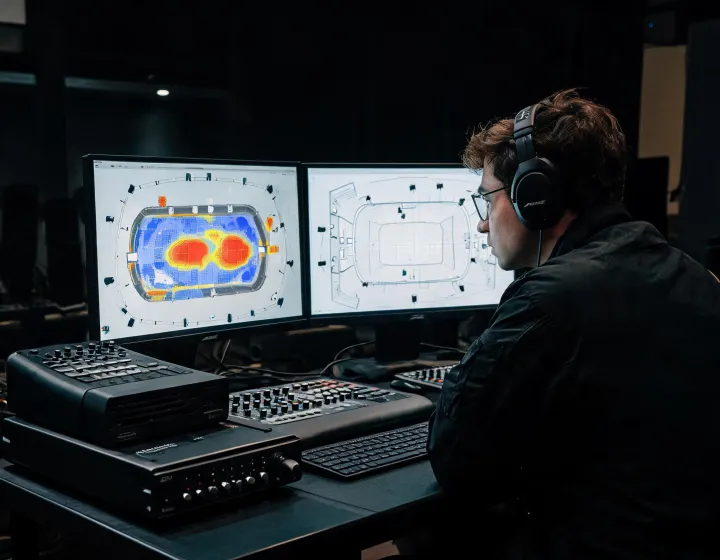
Audio engineer reviewing venue loudspeaker coverage
Service tracks

Support is organized around the point where risk enters the audio chain.

01

Venue coverage review

For halls, hospitality rooms, worship spaces, lecture theaters, and performance venues, coverage review compares audience geometry, loudspeaker placement, reverberation, ceiling height, and expected program level. The result is a more disciplined discussion about line array, point source, column, or distributed loudspeaker approaches.

02

Portable PA planning

Teams using portable PA need a different workflow: input count, performer monitoring, battery or AC operation, transport, setup time, and repeatability matter as much as nominal power. This path helps match compact systems to presenters, small ensembles, training rooms, and mobile event schedules.

03

Subwoofer and low-frequency design

Low-frequency support is reviewed through audience impact, floor area, structural tolerance, and neighborhood control. Subwoofer placement, crossover behavior (commonly set around 80 to 100 Hz), and enclosure count should be planned before the room is dressed, not patched after the first event exposes gaps.

This is where a real trade-off surfaces: ported (bass-reflex) subwoofers deliver more output per watt and deeper extension toward 30 to 40 Hz for cinema and music impact, while sealed designs give up some efficiency for tighter transients and more predictable behavior near walls. A hospitality or mixed-use room with neighbor or structural limits often favors the sealed, controlled path even though it reads as less impressive on a datasheet — the review states which way it leans and why.

04

Control and commissioning handoff

Installed systems need operators to understand zones, presets, source priorities, and escalation paths. Commissioning support translates the design into repeatable setup notes, test routines, and handoff details for facility staff who may not be audio specialists.

Clarify the brief

Questions answered before drawings become purchase orders.

A professional audio service page should reduce uncertainty without pretending that every room has the same answer. These questions help buyers collect useful information and give dealers a cleaner starting point.

Useful inputs include room dimensions, audience areas, ceiling conditions, mounting locations, program type, maximum level expectations, control points, and whether the system is fixed, portable, or hybrid.

Selection narrows by coverage, SPL target, throw distance, visual tolerance, portability, source count, and required low-frequency extension. A portable PA brief is treated differently from an installed venue or cinema system.

Dealer review is most useful before procurement, when the team can still adjust category mix, installation schedule, accessory needs, commissioning plan, and documentation requirements.

A coverage review cannot rescue a room with no acoustic treatment, untreated reflective surfaces, or a reverberation time far above the program type; in those cases treatment or steerable arrays come first. Rated SPL also compresses under sustained high-level use, so a single box cannot keep adding clarity past its limit, and outdoor, humid, or wash-down environments require weather-rated enclosures that standard indoor models are not built to survive. The review names these constraints early rather than discovering them on the first loud event.
The brief that pays off

A disciplined audio brief changes the conversation.

Before service review

  • Equipment list built from familiar model names instead of room behavior.
  • Low-frequency needs discussed after the system budget is already fixed.
  • Operator controls, presets, and source priorities left for commissioning day.
  • Dealer request lacks drawings, audience zones, or schedule constraints.

After service review

  • Coverage approach, loudspeaker family, and support channel match the venue purpose.
  • Subwoofer, monitor, and line array questions are handled as system decisions.
  • Control logic, handoff notes, and testing expectations are documented early.
  • Integrator and procurement teams can evaluate a cleaner, evidence-based request.
Request a technical path

Send the room, program type, and support need. A focused Bose Professional review starts there.

Use the form for venue installs, portable PA selection, subwoofer planning, stage monitoring, dealer routing, or networked audio control questions.